Lingling Chu
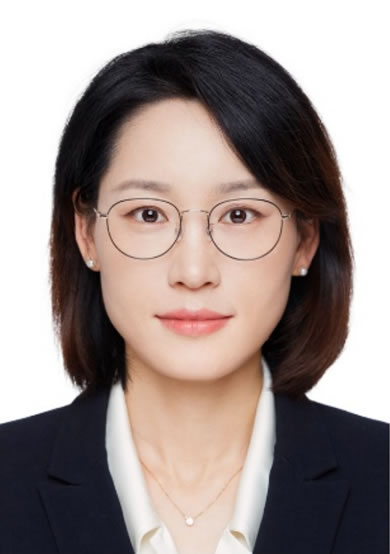
Lingling Chu, Donghua University, PR China
Title: "Asymmetric Multicomponent Radical Cross-Couplings"
Abstract: The development of efficient catalytic multicomponent reactions (MCRs) is highly sought-after in chemical synthesis. Particularly, catalytic radical MCRs represent a powerful technology for rapidly constructing molecular complexity from readily available starting materials with complementary reactivity and selectivity. However, due to the exceptionally high reactivity of open-shell radical species, catalytic asymmetric radical MCRs remain largely under-developed. One of the research interests in the Chu group at Donghua University is developing enantioselective radical MCR reactions via nickel catalysis. This talk will present enantioselective radical three-component difunctionalization reactions of alkenes via nickel catalysis based on chelation and sensitization strategies. Computational and experimental mechanistic studies will be briefly discussed.
Short biography: Lingling Chu was born in Anhui Province, China. She earned her BSc in Engineering from Hefei University of Technology in 2007 and completed her Ph.D. at the Shanghai Institute of Organic Chemistry (SIOC) in 2012 under the supervision of Professor Feng-Ling Qing, focusing on organofluorine chemistry. From 2012 to 2015, she pursued postdoctoral research with Professor David MacMillan at Princeton University, where she worked on photoredox catalysis.
In 2016, she joined Donghua University as a Professor and established her independent research group. Her research interests lie in the areas of transition metal catalysis and radical chemistry. She has authored over 50 publications as a corresponding author in top-tier journals such as Chemical Society Reviews, Journal of the American Chemical Society, Nature Communications, and Angewandte Chemie International Edition, etc.
Dr. Chu is a recipient of the National High-Level Talent Program and the Excellent Youth Program of the National Natural Science Foundation of China. Her scientific contributions have been recognized with several prestigious awards, including the Second Prize of the National Natural Science Award (second rank), the First Prize of Natural Science of Shanghai Municipality (second rank), the Shanghai Women’s Innovation Award, and the Thieme Chemistry Journals Award.