Rodolfo Lavilla
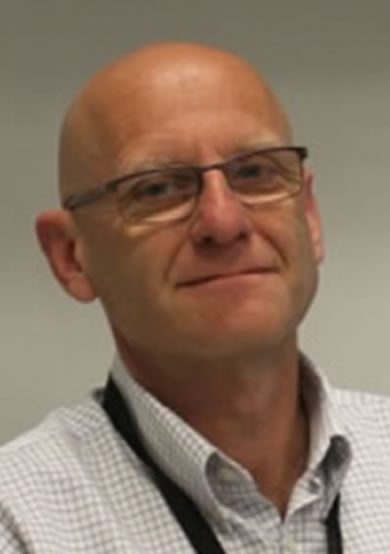
Rodolfo Lavilla, University of Barcelona, Spain
Short biography: Rodolfo Lavilla studied Pharmacy at the University of Barcelona, and later he obtained an M.S. in Medicinal Chemistry and a Ph.D. in Organic Chemistry there. After a postdoctoral stage at the University of California, San Diego, he entered faculty at the University of Barcelona where he is now full Professor of Organic & Medicinal Chemistry. His research interests deal with heterocyclic chemistry, multicomponent reactions, functional probes, medicinal chemistry and selective peptide modifications. He has published over 150 research articles, reviews, book chapters and patents, and holds collaborations with pharma companies and research groups in medicinal and biological chemistry.
HETEROCYCLIC MULTICOMPONENT REACTIONS. NEW REACTIVITY TRENDS AND BIOMED APPLICATIONS (25 years of MCR Research in Barcelona)
Rodolfo Lavillaa
aLaboratory of Medicinal Chemistry, Faculty of Pharmacy and Institute of Biomedicine (IBUB), University of Barcelona (SPAIN).
e-mail: rlavilla@ub.edu
Keywords: Azines, Azoles, Heterocycles, Isocyanides, Reaction Discovery, BioMed Applications
Heterocycles are privileged scaffolds in multicomponent reactions (MCRs), offering unique advantages that set them apart in synthetic chemistry. Their intrinsic reactivity enables the rapid generation of unparalleled structural diversity, provides a fertile platform for reaction discovery, and serves as a powerful tool for the combinatorial synthesis of chemical libraries. Over the past 25 years, our research in Barcelona has explored and expanded the scope of heterocycle-based MCRs, leading to the development of novel methodologies and reaction trends.[1] Given that the majority of approved drugs contain heterocyclic frameworks, the scaffolds obtained through these processes are inherently well-suited for medicinal chemistry and drug discovery. Our approach facilitates the efficient exploration of the MCR-related chemical space, a critical step in establishing robust structure–activity relationships (SAR).[2] In this presentation, we will highlight representative examples, illustrating how heterocyclic MCRs can accelerate the identification of bioactive compounds and open new avenues in biomedical research.

Figure 1. Heterocycle-based MCRs.
Acknowledgements
Funding from Ministerio de Ciencia e Innovación (Spain) and the European Regional Development Fund (EDFR) (PID2022-139180OB-I00), and Generalitat de Catalunya (SGR 2021, 00357) are acknowledged.
References
[1] O. Ghashghaei, P. Nadal Rodríguez, R. Lavilla, Synlett, 2022, 33, 9391–9398.
[2] P. Nadal Rodríguez, O. Ghashghaei, A. Bagán, C. Escolano, R. Lavilla, Biomedicines, 2022, 10, 1488.