Yifeng Chen
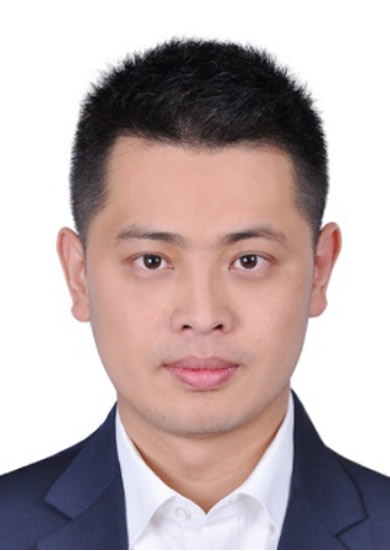
Yifeng Chen, East China University of Science and Technology, Shanghai, PR China
Dr. Yifeng Chen is a professor in the School of Chemistry and Molecular Engineering at East China University of Science and Technology (ECUST). He received his B.S. degree (2007) in Chemistry at Soochow University, and earned his Ph.D. degree (2012) in Organic Chemistry at Shanghai Institute of Organic Chemistry (SIOC) under the supervision of Prof. Yuanhong Liu. He then performed the post-doctoral research with Prof. Stephen Buchwald at Massachusetts Institute of Technology (MIT) and Prof. Timothy Newhouse at Yale University (Yale) respectively before joining ECUST in 2017. His current research interest focuses on the organic chemistry, particularly on the development of novel synthetic method in asymmetric radical chemistry and C1 chemistry.
Asymemtric Radical Addition Chemistry
Yifeng Chen,a
aEast China University of Science and Technology
e-mail: yifengchen @ecust.edu.cn
Keywords:asymmetric catalysis, radical chemsitry, cobalt, carbonyl addition
The catalytic asymmetric addition of carbonyls with organometallic reagents represents a well-established method for chiral amine and alcohol synthesis. Nevertheless, these approaches are dominated by the use of moisture- and air-sensitive organometallic reagents. Moreover, the most reliable organometallic nucleophiles, including organolithium, Grignard reagent and a small number of dialkylzinc reagents, are less functionality-group tolerable. Herein we report a catalytic asymmetric radical addition protocol with various unactivated alkyl halides, including alkyl iodides, alkyl bromides and alkyl chlorides, enabling the formation of chiral α-amino esters, alcohols, amides and sulfinamide with a high level of enantioselectivity and excellent functional group tolerance.
References
[1]Xia, T.; Shu, X.-Z.; Zhou, J. S.; Chen, Y. CCS Chem.2025, doi: 10.31635/ccschem.025.202506433.
[2] Wu, X.+.; Xia, T.+; Bai, J.+; Shi, Y.+; Fang, C.; Hu, J.; Wu, W.; Zhang, C.; Wang, Q.; Huang, G.; Qu, J.;Chen, Y. Nat. Chem.2025, 10.1038/s41557-025-01967-w.
[3] Wu, X.; Xia, H.; Gao, C.; Luan, B.; Wu, L.; Zhang, C.; Yang, D.; Hou, L.; Liu, N.; Xia, T.; Li, H.; Qu, J.; Chen, Y. Nat. Chem.2024, 16, 398.
[4] Wu, L.+; Xia, H.+; Bai, J.; Xi, Y.; Wu, X.; Gao, L.; Qu, J.; Chen, Y. Nat. Chem.2024, 16, 1951.
[5] Zhao, W.; Shen, Y.; Wu, X.; Xia, T.; Hu, J.; Qu, J.; Chen, Y. J. Am. Chem. Soc.2025, 147, 27155.
[6] Liu, N.+; Xia, H.+; Shi, Y.+; Xu, K.; Yu, Z.; Wu, X.; Huang, G.; Qu, J.; Chen, Y. J. Am. Chem. Soc.2025, 147, 26786.