Ouldouz Ghashghaei
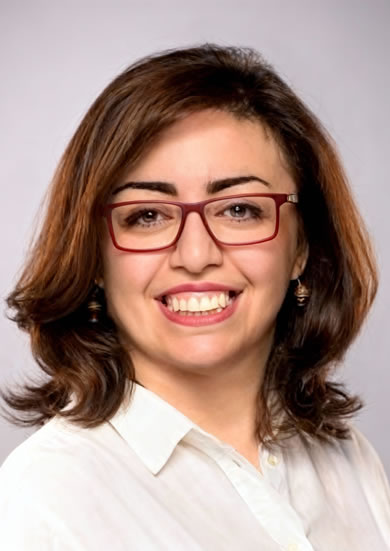
Ouldouz Ghashghaei, University of Barcelona, Spain
Short biography :
Ouldouz received her BSc. in Chemistry and her first MSc. Polymer Sciences from Sharif University of Technology (Iran). Moving to Barcelona, she received a second MSc. and her PhD in Experimental and Industrial Organic Chemistry from the University of Barcelona (UB). She was appointed as the adjunct professor of Organic Chemistry and Medicinal Chemistry at the Faculty of Pharmacy (UB) in 2021 and joined IDIBELL as a research collaborator in 2025. Sha has co-authored 25 scientific publications and has participated in various collaborative projects with public and private partners. Her research focuses on developing chemical tools for biomedical research by facilitating synthetic approaches.
REACTION SPACE CHARTING OF MULTICOMPONENT PROCESSES
Ouldouz Ghashghaei,a,b,c
aLaboratory of Medicinal Chemistry, Faculty of Pharmacy and Institute of Biomedicine (IBUB), University of Barcelona (SPAIN). bImmunology Unit, Department of Pathology and Experimental Therapy, School of Medicine, Universitat de Barcelona, 08907 L’Hospitalet de Lloberegat (SPAIN). cImmunity, Inflammation and Cancer Group, Oncobell Program, Institut d’Investigació Biomèdica de Bellvitge-IDIBELL, 08907 L’Hospitalet de Llobregat (SPAIN).
e-mail: ghashghaei@ub.edu
Keywords:Multicomponent Reactions, Reaction Discovery, Chemical Diversity, Drug Discovery
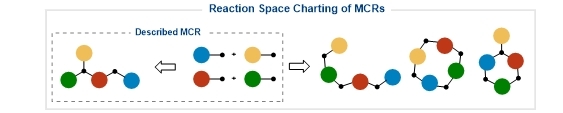
Reaction space charting aims to explore and describe a chemical transformation to fully understand the processes involved. In this way, the studied system can be exploited to extend its reach or develop new applications. Charting is particularly appealing in reaction discovery, as it enables the discovery of previously unknown reaction pathways and the development of new processes.[1]
In this context, multicomponent reactions (MCRs), which combine three or more reactants to generate a unified adduct, epitomize the need for reaction space charting due to their inherent complexity (number of reactants, reactive intermediates, potential reaction pathways, etc.). Our group has applied the charting approach to address the multiparametric nature of MCRs with the aim of expanding their synthetic reach, gaining further mechanistic insights, and eventually developing meaningful applications in drug discovery and biomedicine.[2]
As a representative example, a thorough mapping of the interactions among carbonyls, amines, and isocyanoacetates led to the discovery of new multicomponent processes through novel reaction pathways, thereby achieving vast chemical diversity from simple, off-the-shelf reagents. The heterocyclic nature of the generated scaffolds renders them well-suited for biomedical applications, and the streamlined synthetic access enables rapid construction of chemical libraries, which are critical in medicinal chemistry research.[3] Ongoing collaborations with biological research groups focus on studying these applications.
Acknowledgements
Funding from Ministerio de Ciencia e Innovación (Spain) and the European Regional Development Fund (EDFR) (PID2022-139180OB-I00), as well as AGAUR (Government of Catalonia) (2024 PROD 00106, 2025 INNOV 00017: to Concepcio Soler), is acknowledged.
References
[1] E. Lozano Baró, P. Nadal Rodríguez, J. Juárez-Jiménez, O. Ghashghaei, R. Lavilla. Adv. Synth. Catal.2024, 366, 551-573.
[2] P. Nadal Rodríguez, F. Hartung, M. Pedrola, S. Coomar, A. Diaz-Moreno, A. M. Hätälä, K. M. Rolfes, I. Sánchez-Vera, J. Gil, E. Molins, A. Viayna, A. Hanzl, N. H. Thomä, T. Haarmann-Stemmann, F. J. Luque, R. Lavilla, O. Ghashghaei. ACS Cent. Sci.2025, 11, 629–641.
[3] P. Nadal Rodríguez, O. Ghashghaei, A. M. Schoepf, S. Benson, M. Vendrell, R. Lavilla. Angew. Chem. Int. Ed.2023, 62, e202303889.