Aiwen Lei
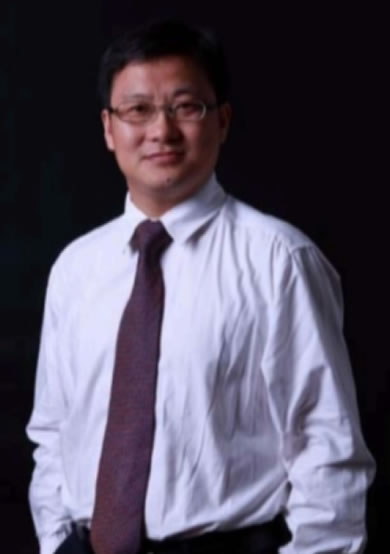
Aiwen Lei, College of Chemistry and Molecular Science, Wuhan University, Wuhan, PR China
Short biograph:
Lei Aiwen, a Second-Class Professor at Wuhan University, Vice Dean of the Advanced Institute of Wuhan University, and Associate Editor of the internationally authoritative journal Green Chemistry. He has received the 4th Yoshida Prize (2019), was named a Leading Talent in Scientific and Technological Innovation under the National "Ten Thousand Talents Program" (2017), a Chang Jiang Scholar Distinguished Professor (2014), a recipient of the National Science Fund for Distinguished Young Scholars (2010), the First Prize of the Outstanding Scientific Research Achievements (Science and Technology) of Institutions of Higher Education of the Ministry of Education (2017, first completer), and the First Prize of Natural Science of Hubei Province (2012, first completer). He serves as the Deputy Director of the Homogeneous Catalysis Professional Committee of the Catalysis Committee of the Chinese Chemical Society, a Member of the Organic Chemistry Disciplinary Committee of the Chinese Chemical Society, and a Member of the Physical Organic Chemistry Professional Committee of the Chinese Chemical Society.
Alternating Current (AC) Electrolysis toward Organic Syntheses
Aiwen Lei,a
a Institute for Advanced Studies Wuhan University, 430072, China, Wuhan
e-mail: aiwenlei@whu.edu.cn
Keywords:AC electrolysis, organic synthesis, metal-catalyzed electrolysis, reaction intermediates
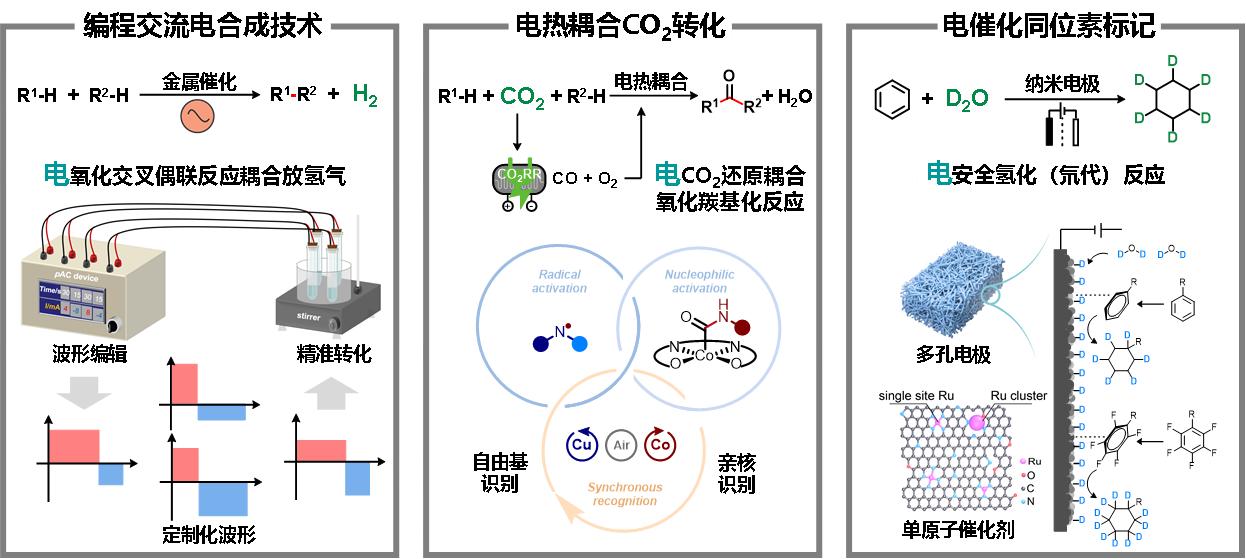
Electricity, as an important form of energy, has contributed to the rapid development of modern industry. The microscopic core of the precise control of electricity is the level of precise manipulation of electrons, which has been widely used in many fields and industries, such as electronic devices and intelligent control, mapping the progress of society, but the application in the synthesis of substances is still in the initial stage. Our team reports a programmable waveform alternating current (AC) synthesis technology that realizes two types of anodic oxidation-coupled cathodic hydrogen discharge reactions. By adjusting the parameters of frequency, current and duty cycle of the alternating current, customized current waveforms are generated, thus achieving precise control of transition metal catalytic species and breaking the dependence of traditional DC catalysis on diaphragm electrolytic cells. This study provides a new opportunity to introduce electronic precision control technology into the field of electrosynthesis. In addition, the team also reported the coupled oxidative carbonylation reaction mode of electroreduced carbon dioxide, in which CO, which is commonly used in industry, was replaced with inert and non-toxic carbon dioxide, and then asymmetric ureas, which are important for pharmaceutical and pesticide applications, were synthesized with high efficiency. In the study of nano-metal cathode-catalyzed reduction of deuterium substitution reaction, the team successfully synthesized high-value deuterium drugs, which are difficult to be achieved by traditional methods, by using cheap and easy-to-obtain deuterium water as deuterium source through the electrocatalytic strategy. The research results demonstrate the great potential of synthetic electrochemistry in drug development and practical applications.
References
-
Lei A.* et. al., Science2024, 386, 776-782.
-
Lei A.* et. al., Science2024, 385, 216-223.
-
Lei A.* et. al., Nature 2024, 634, 592-599.
-
Lei A.* et. al., Nat. Chem.2024, 16, 1621-1629.
-
Lei A.* et. al., Nat. Synth.2023, 2, 217-230.