Keiji Maruoka
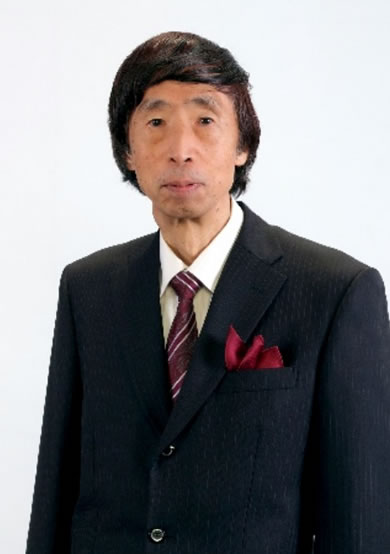
Keiji Maruoka, Kyoto University, Japan and Guangdong University of Technology, PR China
Short Biography: Keiji Maruoka was born in Japan. He graduated from Kyoto University (1976) and received his Ph.D. (1980) from University of Hawaii (Thesis Director: Prof. H. Yamamoto). He became an assistant professor of Nagoya University (1980) and promoted to a lecturer (1985) and an associate professor (1990) there. He moved to Hokkaido University as a full professor (1995-2001), and then was a professor in the Graduate School of Science in Kyoto University (2000-2019). After formal retirement, he is now a specially-appointed professor in Kyoto University since 2019. He is also a chair professor of Guangdong University of Technology, China as a second-term Chang-Jiang Scholar. Recently, he was awarded the Chemical Society of Japan Award (2007), the Molecular Chirality Award (2007), Novartis Lectureship Award (2007/2008), Chunichi Cultural Prize (2010), Arthur C. Cope Scholar Awards (2011), Medal of Honor with Purple Ribbon (2011), Humboldt Research Award (2011), Torey Science & Technology Award (2012), Noyori Prize (2016), The Japan Academy Prize (2018), Fujiwara Award (2022), and 2023 Ryoji Noyori ACES award. He also serves as the President of the Chemical Society of Japan since 2024.
Development of New Photoinduced Multi-Component Radical Relay Reactions
Abstract:
Rapid assembly of readily and widely available substrates into synthetically valuable molecules is of prime importance in modern organic synthesis. The use of small organic molecules that can be connected with multiple substrates by a sequential C−C bond-forming process has offered a multidirectional approach to increase molecular complexity with high modularity. Such multicomponent protocols utilizing linchpin compounds have enabled the expeditious construction of complex building blocks for natural products and biologically active compounds. However, their C−C bond-forming processes rely heavily on the use of organometallic reagents as strong nucleophiles, which narrows the scope of accessible products due to limited functional group compatibility. Moreover, complicated manipulations under cryogenic conditions with the strict prohibition of water are frequently required to control the reactivity of these reagents and intermediates. On the other hand, the chemistry of radical species can provide a complementary approach to that of ionic species for new bond formations. The recent advances in synthetic methodologies for the generation of radical species, such as photoredox catalysis and electrocatalysis, have made these conditions milder and more practical. Despite these breakthroughs, the linchpin coupling strategy based on radical-mediated C−C bond formations has been less explored. In this lecture, I would like to describe a metal-free, radical-mediated coupling approach using formyl- and carbonyl-stabilized phosphonium ylides as multifunctional linchpins under visible-light photoredox conditions. The stepwise and controllable generation of these radical intermediates allows sequential photocatalysis involving two mechanistically distinct radical additions, both of which are initiated by the same photocatalyst in one pot with a high functional-group tolerance.

References:
-
Matsumoto, A.; Maeda, N.; Maruoka, K. J. Am. Chem. Soc. 2023, 145, 20344-20354.
-
Qiu, H.; Matsumoto, A.; Maruoka, K. J. Am. Chem. Soc. 2024, 146, 35478-35485.
-
Caner, N.; Maeda, N.; Yokokawa, D.; Matsumoto, A.; Maruoka, K. JACS. Au2025, 5, 2463-2468.