Wei Shu
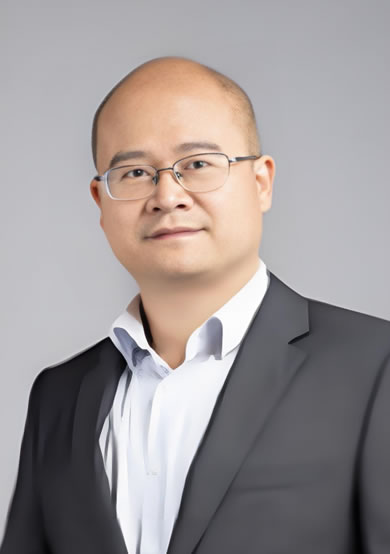
Wei Shu, Southern University of Science and Technology, Shenzhen, Guangdong, PR China
Short biography:
Wei Shu is a Principal Investigator with tenure in the Department of Chemistry at the Southern University of Science and Technology (SUSTech). He obtained his B.Sc. from Nankai University and pursued doctoral studies at the Shanghai Institute of Organic Chemistry (Chinese Academy of Sciences) under the guidance of Professors Shengming Ma and Guochen Jia. Following postdoctoral training with Professors Cristina Nevado (University of Zurich), David W. C. MacMillan (Princeton University), and Stephen L. Buchwald (Massachusetts Institute of Technology), he started his independent career at SUSTech in 2018. His research interests span over visible-light catalysis, transition-metal catalysis, asymmetric synthesis, microfluidic chemistry, and medicinal chemistry.
Catalytic Asymmetric Cross-Hydrodimerization of Hydrocarbons
Wei Shu,a
aDepartment of Chemistry, Southern University of Science and Technology, Shenzhen 518055, Guangdong, China
e-mail: shuw@sustech.edu.cn
Keywords:Earth-Abundant-Metal-Catalysis, Asymmetric Cross-Hydrodimerization, Unsaturated Hydrocarbons
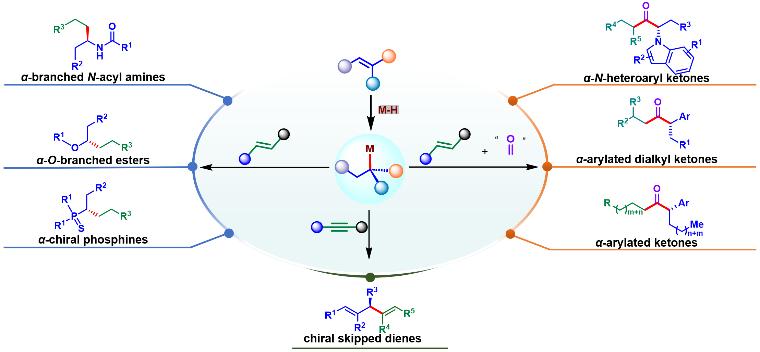
Saturated stereogenic carbon centers comprise majority of the framework of organic molecules.[1]However, flexible configuration as well as increased steric hindrance of sp3hybridized centers impose challenges for direct constructing such stereogenic centers. Traditional cross-coupling heavily relies on the use of stoichiometric preformed alkyl nucleophiles or/and alkyl electrophiles, which significantly limited the scope and application. Therefore, to develop new cross-coupling reaction modes to build saturated stereogenic carbon centers with the control of regio- and stereochemistry is highly demanding yet challenging.[1]Our interests lie in the development of earth-abundant-metal-catalyzed asymmetric sp3-cross-coupling reactions, with an emphasis on developing new reaction modes without using stoichiometric alkyl nucleophiles or alkyl electrophiles (Scheme 1).[3]
References
[1](a) Lovering, F.; Bikker, J. Humblet, C.;J. Med. Chem.2009, 52, 6752. (b) Geist, E.; Kirschning, A.; Schmidt, T. Nat. Prod. Rep.2014, 31, 441.
[2](a) Yang, P.-F.; Shu, W. Chem Catal.2023, 3, 100508.(b) You, L.-X.; Tian, L.; Guo, C.-L.; Li, S.-X.; Liu, Y.-C.; Li, Y.-L.; Shu, W.; Sci. China Chem.2025, 68, 3376.
[3](a) Yang, P.-F.; Zhao, H.-T.; Chen, X.-Y.; Shu, W. Nat. Synth.2024, 3, 1360. (b) Zi, Q.-X.; Shu, W. Adv. Sci.2024, 11, 202409592. (c) Zou, J.-Y.; Xing, F.-L.; Chen, M.; Shu, W. Sci. Adv.2025, 11, adv6571. (d) Chen, X.-Y.; Yu, Q.; Shu, W. Angew. Chem. Int. Ed.2025, 63, e202423426. (e) Du, Y.-M.; Chen, X.-Y.; Li, Y.; Koh, M. J.; Shu, W. Nat. Commun.2025, 16, 4163.(f) Du, Y.-M.; Shu, W. J. Am. Chem. Soc.2025, 147, 18944.(g) Meng, H.; Shu, W. J. Am. Chem. Soc.2025, 147, 41738.