Min Zhang
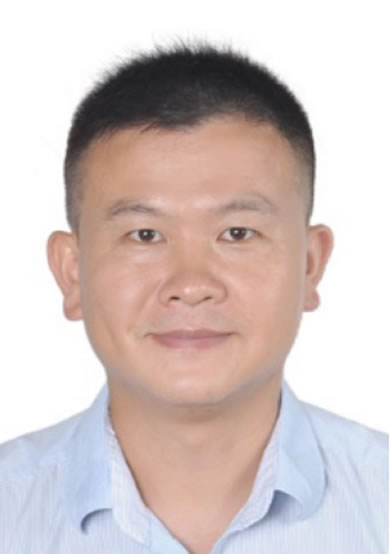
Min Zhang, South China University of Technology, Guangzhou, PR China
Short biography: From 2003 to 2006, Professor Zhang Min pursued a joint master's training program at Jinan University and the Shanghai Institute of Organic Chemistry, Chinese Academy of Sciences. Between 2006 and 2009, he engaged in a joint doctoral training program at the University of Rennes 1 in France (Prof. Pierre. H. Dixneuf) and South China University of Technology(Prof. Jiang, H. F.), graduating with doctoral degrees from both institutions. Subsequently, he conducted research as an Alexander von Humboldt Fellow and postdoctoral researcher in Germany(Prof. Beller M). In 2014, he began his independent research career at South China University of Technology. Currently, he is primarily engaged in fundamental research in green and sustainable catalytic organic synthesis chemistry, as well as industrial application studies in areas such as resins and cleaning agents.
Catalytic reduction-specified tandem reaction
Min Zhang,a
aSchool of Chemistry and Chemical Engineering, South China University of Technology, Guangzhou 510641, China
e-mail: minzhang@scut.edu.cn
Keywords:Reductive tandem reactions, functional N-molecules, sustainable catalysis and synthesis
By employing unsaturated nitrogen-containing aromatics as the fundamental feedstocks, our group has been focusing on the utilization of their reductive intermediates to develop new tandem reactions in recent years(Fig. 1), and the develped synthetic methods were further applied for streamline synthesis of functional molecules such as biomedicals, ligands, dyes, polymers, etc. By employing different strategies, the talk will present precise in situinterception of single reductive intermediates among multiple ones to develop tandem reactions involving both C–C and C–N bond formations. The contents will cover the following two sections: (1) Reductive functionalization of N-heteroarenes.[1] (2) Reductive tandem reactions for direct and diverse construction of functional N-containing molecules.[2]
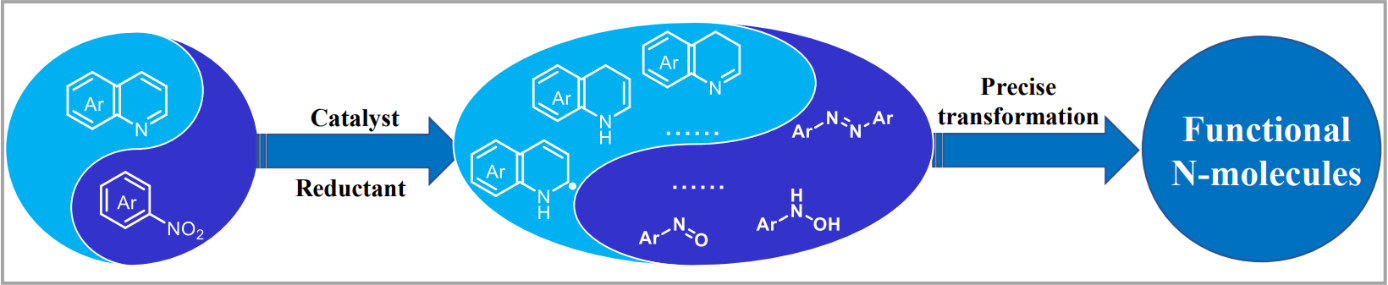
Figure 1. Reduction-specified tandem reactions
References
[1] Selected examples: (a) Jia, H. H.; Tan, Z. D.; Zhang, M*. Acc. Chem. Res.2024, 57, 795-813. (b) Cao, L.; Zhang, M*.; et al. Nat. Commun.2021, 12, 4206. (c) Zhao, H.; Wu, Y.; Zhang, M*.; et al. Nat. Commun. 2022, 13, 2393. (d) Jia, H. H; Xie, R.; Lu, G. P.; Jiang, H. F.; Zhang, M*. ACS. Catal.2022, 12, 10294. (e) Xie, R.; Zhang, M*.; et al. Chem. Sci. 2021, 12, 13802. (f) Tan, Z. D.; Zhang, M*.; et al. ACS Catal. 2020, 10, 5243. (g) Yang, J.; Zhao, H.; Tan, Z. D.; Cao, L.; Jiang, H. F.; Ci C. G.; Zhang, M*. ACS Catal. 2021, 11, 9271. (h) Xie, F.; Zhang, M*.; et al. ACS. Catal.2017, 7, 4780. (i) Chen, X. W.; Zhang, M*.; et al. Angew. Chem. Int. Ed. 2017, 56, 14232. (j) Wang, M. R.; Zhang, C. Q.; Ci, C. G.; Jiang, H. F.; Pierre, H. D.; Zhang, M*. J. Am. Chem. Soc. 2023, 145, 10967. (k) Wang, M. R.; C. Q. Zhang, H. Zhao, H. F. Jiang, P. H. Dixneuf, Zhang, M*. CCS Chem. 2024, 6, 342. (l) Yang, J.; Yao, B.; Jiang, H. F.; Ni, S. F.; Zhang, M*. Angew. Chem. Int. Ed.,2025, 64, e202505060. (m) Chen, X. Y.; Wang, M. R..; Jiang, H. F.; Dixneuf, P. H. Zhang, M*.J. Am. Chem. Soc.,2025, 147, jacs.5c16945.
[2] (a) Hua, H. T., Zhang M.* et al. J. Am. Chem. Soc. 2025, 147,6572. (b) Liang, Z. Y.; Zhang, M* et al. J. Am. Chem. Soc. 2025, 147,jacs.5c18641.(c) Liang, Z. Y.; Zhang, M* et al. Angew. Chem. Int. Ed.2025, 64, e202516510. (d) Sun, J. L.; Jiang, H. F.; Dixneuf, P. H.; Zhang, M*. J. Am. Chem. Soc. 2023, 145, 17329. (e) Sun, J. L.; Jiang, H. F.; Dixneuf, P. H.; Zhang, M*. J. Am. Chem. Soc. 2024, 146, 11289. (f) Sun, J. L.; Ci, C. G.; Jiang, H. F.; P. H. Dixneuf, Zhang, M*.Angew. Chem. Int. Ed.2023, e202303007. (g) Jia, H, H.; Liu, W.; Liao, Q.; Jiang, H. F.; Pierre, H. D.; Zhang, M*. J. Am. Chem. Soc. 2024, 146, 31647.